

Orthodontic microscrews
Small titanium screws placed temporarily in the bone as extra anchorage during orthodontic treatment.
What are microscrews and what are they for?
Microscrews, also known as mini implants or anchorage screws, are small devices used in orthodontics to provide an additional anchorage point during treatment. These screws are made of titanium or titanium alloys and have a shape similar to a conventional screw, but are much smaller, generally with a diameter of around 1.2 to 2 mm and a length of 6 to 12 mm.
Microscrews are inserted into the bone temporarily to provide firm anchorage for orthodontic appliances. They are placed in specific areas of the mandible or maxilla, according to the patient's needs and the treatment plan. These devices allow orthodontists to exert precise forces on the teeth and better control their movement.
The insertion of microscrews is usually performed in the dental office under local anesthesia. A minimally invasive surgical procedure is used to insert the screws into the bone, and once they have been correctly placed, force can be applied through orthodontic appliances to correct the position of the teeth.
One of the advantages of microscrews is that they can provide anchorage in situations where there are not enough teeth available to place bands or tubes. Additionally, they are removable after treatment has been completed.
It is important to note that the placement and use of microscrews should be performed by an experienced orthodontist, as they require special knowledge and skills. An orthodontist will carefully evaluate the viability and need to use microscrews in each particular case before making a decision.

Microimplant placement procedure in orthodontics
Process of placing microscrews in orthodontics:
Evaluation and planning
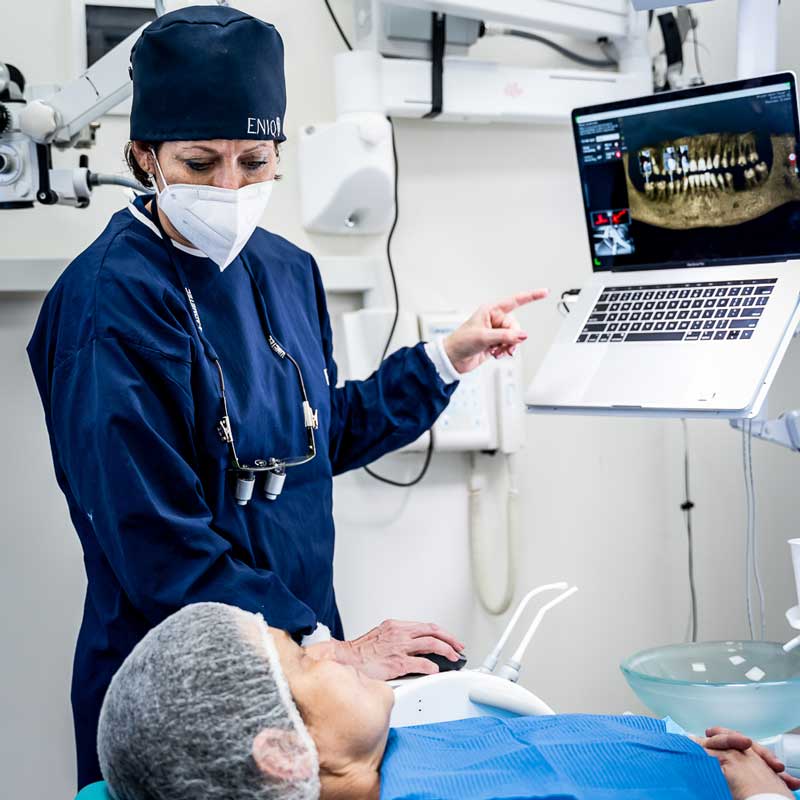
The orthodontist will perform a complete evaluation, including X-rays and dental models, to determine the suitability of microscrews for your case and plan their precise location.
Preparation and anesthesia
The insertion area will be cleaned and disinfected, followed by local anesthesia to ensure your comfort.
Insertion of microscrews
A small incision will be made in the gums to access the bone and the microscrews will be slowly screwed in until they are firmly anchored.
Fixation of microscrews
Once in place, they will be fixed to the bone with a key or special instrument to prevent movement during treatment.
Closure and post-operative care
The gums will be sutured and instructions for care of the area will be provided, including oral hygiene and dietary restrictions.
It is normal to experience some discomfort after placement, but this can be relieved with pain relievers. It is important to follow the orthodontist's instructions and attend follow-up visits to monitor the progress of treatment.
Combined with metal or self-ligating braces, micro-screws provide firm anchorage to move the teeth with more control. They can also be combined with invisible orthodontic aligners, which makes it possible to treat more complex cases. They are placed under local anesthesia; if the injection worries you, digital anesthesia makes it more comfortable.

How many appointments are needed to place microscrews?
The number of appointments needed to place a microscrew can vary depending on several factors, such as the complexity of the case and the preferences of the orthodontist. Generally, the process of placing a microscrew can take one or two appointments.

Duration
First appointment
The orthodontist will perform a complete evaluation of your mouth and plan the precise location of the microscrew. At this appointment, the placement of the microscrew can also be performed.
Second appointment (if necessary)
In cases where multiple microscrews are planned to be placed in different areas, a second appointment may be necessary to complete the placement of the remaining microscrews.
It is important to note that each case is unique, and the exact number of appointments may vary according to individual circumstances. Your orthodontist will provide you with accurate information about the number of appointments needed for the placement of microscrews in your specific case.

Advantages and Disadvantages of Microscrews in Orthodontics
There are different important considerations about the use of microscrews in orthodontics that you should know before starting treatment.
Advantages
Microscrews offer multiple benefits in orthodontic treatment:
- Additional anchorage: Microscrews provide an extra anchorage point, improving control of tooth movement.
- Versatility: They can be placed in various areas, offering flexibility in different clinical cases.
- Minimally invasive procedure: Their placement is generally straightforward, with less trauma and quick recovery.
- Removable: Microscrews are removable after treatment, without the need for additional surgery.
Disadvantages
There are also some considerations to keep in mind about microscrews:
- Require experience: They need specific skills and experience for correct placement.
- Possible complications: Possibility of complications such as gum irritation or infections, although they are uncommon.
- Post-operative discomfort: Mild post-operative discomfort is common but generally manageable.
Microscrews with Invisible Orthodontics
The combination of microscrews with invisible orthodontics offers unique advantages:
- Additional anchorage: Improves control of tooth movement with clear aligners.
- Precision in tooth movement: Allows for more exact and effective adjustments of the aligners.
- Reduction of attachments: Reduction of necessary attachments, improving the aesthetics and comfort of treatment.
- Greater versatility: Greater versatility in the treatment plan, suitable for more complex cases.
It is crucial to discuss with your orthodontist to fully understand the implications of using microscrews and determine if this combination is right for you.
What is the success rate with the microscrew technique?
Advantages of treatment with microscrews at ENIQ
Placing microscrews using technology offers significant advantages over conventional methods.
- Precision Technologies such as three-dimensional imaging, intraoral scanners, and CBCT X-rays allow for more precise planning and placement of microscrews.
- Virtual planning The use of virtual planning software facilitates simulation and detailed planning of the procedure before its execution.
- Placement guides with guided dynamic navigation The creation of personalized surgical guides ensures exact and precise position during the placement of microscrews.
- Shorter procedure time Technology can reduce the time needed for the procedure, resulting in a more efficient experience for the patient.
- Greater comfort for the patient The need for traditional impressions is minimized by using intraoral scanners to obtain digital images.
It is essential to consult with an orthodontist who uses these advanced technologies in their clinical practice to take advantage of these benefits.
How much do orthodontic microscrews cost?
Microscrews
Precise solution
Microscrews are included in the total price of orthodontic treatment. We deliver a closed budget without hidden costs.
Included in orthodontic treatment
No additional cost per unit
Closed budget without small print
Replacement included if necessary

Frequently asked questions about orthodontic microscrews
Answers to common questions about microscrews in orthodontics in Madrid. customer service.
They are small screws (mini implants) placed temporarily in the bone to give orthodontic appliances a firm anchorage point. They allow teeth to be moved with more control, even when there are not enough teeth to support bands or tubes.
At Clínica ENIQ they are not charged separately: they are included in the total price of the orthodontic treatment, with a fixed quote and repositioning included if needed.
The time that microscrews remain in place varies according to the case and the specific treatment plan. Generally, microscrews are maintained throughout the active orthodontic treatment period, which can last from several months to a couple of years. Once the treatment goals have been achieved and the teeth are in the desired position, the microscrews are removed simply and painlessly. Your orthodontist will determine the appropriate time to remove the microscrews according to your individual progress.
The placement of microscrews in orthodontics is generally performed under local anesthesia, so you should not feel pain during the procedure. You may experience slight pressure or discomfort during insertion, but this is normal and temporary. After the procedure, it is common to experience some sensitivity or discomfort in the insertion area for a few days, but this can be managed with over-the-counter pain relievers. Most patients find that any discomfort is minimal and tolerable.
When they are no longer needed, the orthodontist removes them in the clinic, without any further surgery.
Yes. Combined with clear aligners they provide extra anchorage that improves control of tooth movement, reduces the attachments needed and allows more complex cases to be treated.