

Aparatos
Dispositivos ortodónticos para corregir la posición dental
¿Qué son los aparatos o aparatología interceptiva en ortodoncia?
La aparatología interceptiva o funcional en ortodoncia se refiere a un conjunto de dispositivos y aparatos que se utilizan para corregir problemas de maloclusión y desarrollo de los maxilares en niños en crecimiento. Estos aparatos tienen como objetivo influir en el crecimiento y la posición de los maxilares, así como en la alineación de los dientes, para lograr una mejor oclusión y una correcta función de la boca.
La aparatología interceptiva se utiliza generalmente en pacientes en etapas tempranas de crecimiento, cuando los huesos y los tejidos faciales aún están en desarrollo y son más maleables. El tratamiento interceptivo busca corregir anomalías esqueléticas y dentales antes de que se conviertan en problemas más graves y difíciles de tratar en etapas posteriores.
Algunos ejemplos de aparatos interceptivos o funcionales son los expansores palatinos, los aparatos de avance mandibular, los activadores musculares, los retenedores funcionales y los elásticos intermaxilares. Estos aparatos aplican fuerzas suaves y controladas sobre los dientes y los huesos para guiar el crecimiento y la posición de los maxilares, mejorar la relación entre la mandíbula superior e inferior y corregir la posición de los dientes.

Es importante destacar que la aparatología interceptiva en ortodoncia es parte de un enfoque multidisciplinario, que puede incluir la colaboración entre ortodoncistas, ortopedistas maxilofaciales y otros especialistas dentales. El objetivo principal es lograr una oclusión funcional, una adecuada estética facial y mejorar la salud bucal en general. Cada paciente es evaluado individualmente para determinar el tipo de aparato funcional más adecuado según sus necesidades específicas.
¿Cuáles son los pasos del procedimiento de aparatología interceptiva en ortodoncia?
El procedimiento de la aparatología interceptiva en ortodoncia varía según el caso, siguiendo estos pasos generales:
Evaluación y diagnóstico
Evaluación completa por parte del ortodoncista, utilizando radiografías, fotografías y modelos dentales para un diagnóstico detallado y determinar la necesidad de aparatología interceptiva.
Diseño del plan de tratamiento
Creación de un plan de tratamiento personalizado, seleccionando los aparatos adecuados, estimando la duración del tratamiento y estableciendo objetivos claros.
Colocación del aparato
Cementación de brackets, colocación de bandas o adaptación de aparatos removibles en la boca del paciente.
Ajustes y seguimiento
Citas regulares para ajustes y monitoreo del progreso, incluyendo la activación de resortes o la modificación de alambres.
Finalización del tratamiento
Retiro del aparato interceptivo tras alcanzar los objetivos de tratamiento, con posible tratamiento ortodóntico adicional para alineación completa.
Es crucial la personalización del tratamiento a cada paciente, el seguimiento de las instrucciones del ortodoncista y la asistencia a todas las citas para obtener los mejores resultados.

¿Cuál es la importancia de los aparatos de ortodoncia removibles?
Los aparatos de ortodoncia removibles desempeñan un papel importante en el tratamiento ortodóntico por varias razones:

Ventajas
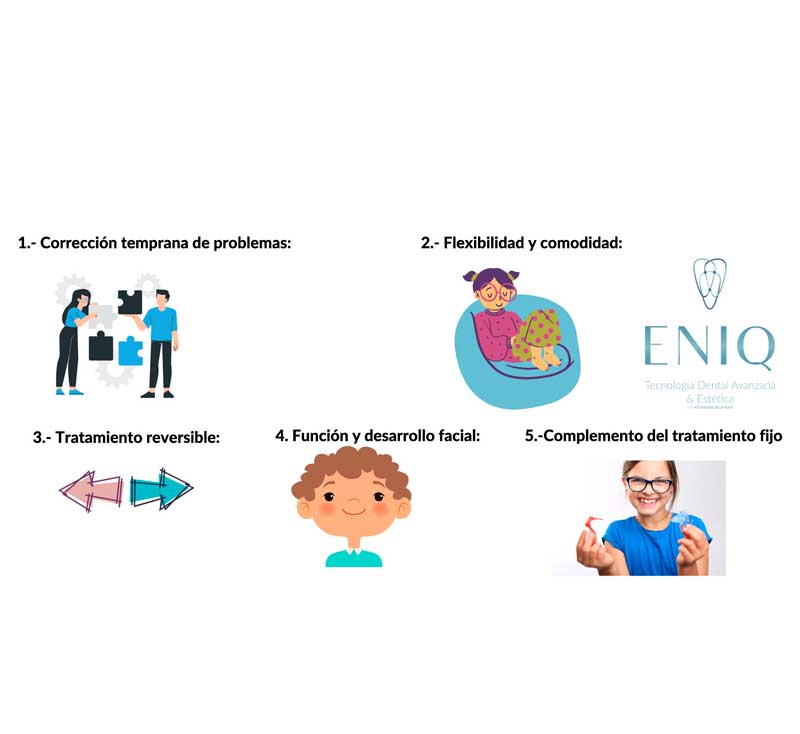
Corrección temprana de problemas
Los aparatos removibles son especialmente útiles en pacientes jóvenes, cuyos maxilares y dientes están en desarrollo. Estos aparatos permiten abordar problemas de maloclusión y de desarrollo de los maxilares en etapas tempranas, cuando es más fácil corregirlos y evitar que se conviertan en problemas más graves.
Flexibilidad y comodidad
Los aparatos removibles pueden ser retirados por el paciente, lo que facilita la higiene bucal y permite comer y hablar con mayor comodidad. Esto significa que el paciente puede mantener una buena salud bucal durante el tratamiento y llevar una vida cotidiana más normal.
Tratamiento reversible
En muchos casos, los aparatos removibles permiten un enfoque de tratamiento reversible. Esto significa que si los resultados no son los esperados o si se producen cambios en el plan de tratamiento, el ortodoncista puede ajustar o cambiar el aparato de forma relativamente sencilla. Esto ofrece una mayor flexibilidad y permite adaptar el tratamiento a medida que se desarrolla.
Función y desarrollo facial
Algunos aparatos removibles, como los retenedores funcionales y los activadores musculares, no solo corrigen la posición de los dientes, sino que también influyen en el crecimiento y desarrollo de los maxilares y los músculos faciales. Estos aparatos pueden mejorar la función de la mordida, la estabilidad de los resultados a largo plazo y la estética facial en general.
Complemento del tratamiento fijo
En muchos casos, los aparatos removibles se utilizan como parte de un plan de tratamiento combinado, en conjunto con aparatos fijos, como brackets. Los aparatos removibles pueden ayudar a preparar los dientes y los maxilares antes de la colocación de los aparatos fijos, acelerar el proceso de alineación o realizar ajustes específicos durante diferentes etapas del tratamiento.
Es importante destacar que la eficacia de los aparatos removibles depende del cumplimiento y la constancia del paciente en su uso. Seguir las indicaciones del ortodoncista y utilizar el aparato de manera regular y adecuada es esencial para lograr los resultados deseados.

Tipos de aparatos y comparativa
Existen varios tipos de aparatos removibles utilizados en la ortodoncia interceptiva para niños, cada uno con características y aplicaciones específicas.
¿Cuáles son los tipos de aparatos removibles u ortodoncia interceptiva en niños?
A continuación, mencionaré algunos de los más comunes:
- Placas activas o planas: Estos aparatos consisten en una placa acrílica que cubre el paladar o el maxilar superior y se apoya en los dientes posteriores. Pueden tener elementos como tornillos expansores, resortes o ganchos para aplicar fuerzas específicas y corregir maloclusiones como mordida cruzada o apertura excesiva.
- Expansores palatinos: Son aparatos que se utilizan para corregir estrechamientos del maxilar superior y expandir el paladar. Estos aparatos tienen un tornillo expansor en el centro que se activa para aplicar gradualmente fuerzas de expansión en el paladar.
- Activadores musculares o funcionales: Estos aparatos están diseñados para corregir problemas de crecimiento y posición de los maxilares, así como mejorar la función muscular. Por lo general, se colocan en el paladar y tienen elementos como rampas, pistas o bolas que interactúan con la lengua y los músculos orofaciales, promoviendo el desarrollo adecuado de los maxilares y mejorando la posición de los dientes.
- Retenedores funcionales: También conocidos como aparatos de posición mandibular, se utilizan para corregir problemas de mordida profunda, sobremordida o retrognatia mandibular. Estos aparatos tienen una placa acrílica en el paladar y una estructura metálica que se ajusta a los dientes inferiores para guiar la mandíbula a una posición más favorable.
- Mantenedores de espacio: Estos aparatos se utilizan para mantener el espacio en la boca cuando un diente de leche ha sido extraído prematuramente o se ha perdido debido a una caries o un trauma. Los mantenedores de espacio evitan que los dientes vecinos se muevan y ocupen el espacio antes de que los dientes permanentes erupcionen.
¿Cuál es la elección correcta: Aparatología Interceptiva Fija o Removible?
No se puede determinar un enfoque de aparatología interceptiva como "mejor" en términos absolutos, ya que la elección entre aparatología interceptiva fija o removible depende de diversos factores, como la naturaleza del problema a tratar, la edad del paciente y las preferencias del ortodoncista. Ambos enfoques tienen sus ventajas y se utilizan en diferentes situaciones.
- Aparatología interceptiva fija: Mayor control sobre la posición de los dientes y los huesos. Uso constante durante todo el tratamiento. Mayor capacidad de corrección para una amplia gama de problemas de maloclusión.
- Aparatología interceptiva removible: Mayor comodidad y conveniencia para el paciente. Tratamiento reversible con ajustes más sencillos. Estimulación muscular y desarrollo facial además de corregir la posición de los dientes.
Es importante destacar que la elección del aparato removible depende del diagnóstico y las necesidades específicas de cada paciente. El ortodoncista evaluará cuidadosamente cada caso para determinar qué tipo de aparato es el más adecuado y diseñar un plan de tratamiento personalizado. La elección entre aparatología interceptiva fija o removible dependerá de la evaluación y diagnóstico realizado por el ortodoncista, así como de las necesidades específicas del paciente.
¿Qué beneficios tiene el realizarse un tratamiento con aparatología removible ortodóntica en ENIQ?
La aplicación de tecnología ENIQ en la aparatología removible o funcional puede ofrecer varias ventajas y mejoras en el proceso de tratamiento ortodóntico. Algunas de las ventajas de utilizar tecnología en este tipo de aparatos son:
Diseño personalizado
La tecnología de escaneo 3D y diseño asistido por computadora permite crear aparatos removibles o funcionales de forma más precisa y personalizada para cada paciente. Esto asegura un mejor ajuste y comodidad, así como una mayor eficacia en la aplicación de las fuerzas necesarias para corregir la maloclusión.
Mayor eficiencia en el tratamiento
La tecnología digital puede acelerar y mejorar el proceso de fabricación de los aparatos. Los aparatos removibles o funcionales se pueden fabricar de manera más rápida y eficiente, reduciendo el tiempo total de tratamiento y permitiendo una respuesta más rápida a las necesidades del paciente.
Monitoreo y seguimiento del progreso
Algunos aparatos removibles o funcionales pueden contar con sensores o dispositivos de seguimiento integrados que permiten a los ortodoncistas monitorear el uso y la efectividad del aparato. Esto proporciona datos objetivos sobre el progreso del tratamiento y permite ajustes precisos si es necesario.
Educación y motivación del paciente
La tecnología puede ayudar a educar y motivar a los pacientes durante el tratamiento. Algunos aparatos removibles pueden contar con aplicaciones móviles o interfaces digitales que brindan información sobre el progreso del tratamiento, recordatorios de uso y ejercicios interactivos para mejorar la adherencia y la eficacia del tratamiento.
Colaboración interdisciplinaria
La tecnología digital facilita la colaboración entre diferentes especialistas dentales, como ortodoncistas, ortopedistas maxilofaciales y dentistas generales. Los datos y registros digitales se pueden compartir fácilmente, lo que mejora la comunicación y la coordinación del tratamiento entre los profesionales involucrados.
En resumen, la integración de tecnología en la aparatología removible o funcional puede mejorar la precisión, la eficiencia y la experiencia del paciente durante el tratamiento ortodóntico. Sin embargo, es importante destacar que la implementación de tecnología puede variar según la clínica y los recursos disponibles en cada caso específico.
¿Qué precio tienen los aparatos dentales?
Aparatología interceptiva
Aparatos dentales
El costo de la aparatología removible puede oscilar entre 500 euros y 2.000 euros o más. Sin embargo, es importante tener en cuenta que este rango de precios es aproximado y puede variar significativamente.
Todo incluido

FAQ
Preguntas frecuentes sobre aparatos de ortodoncia
Resuelve tus dudas sobre aparatologia funcional en Madrid. servicio de atención al cliente.